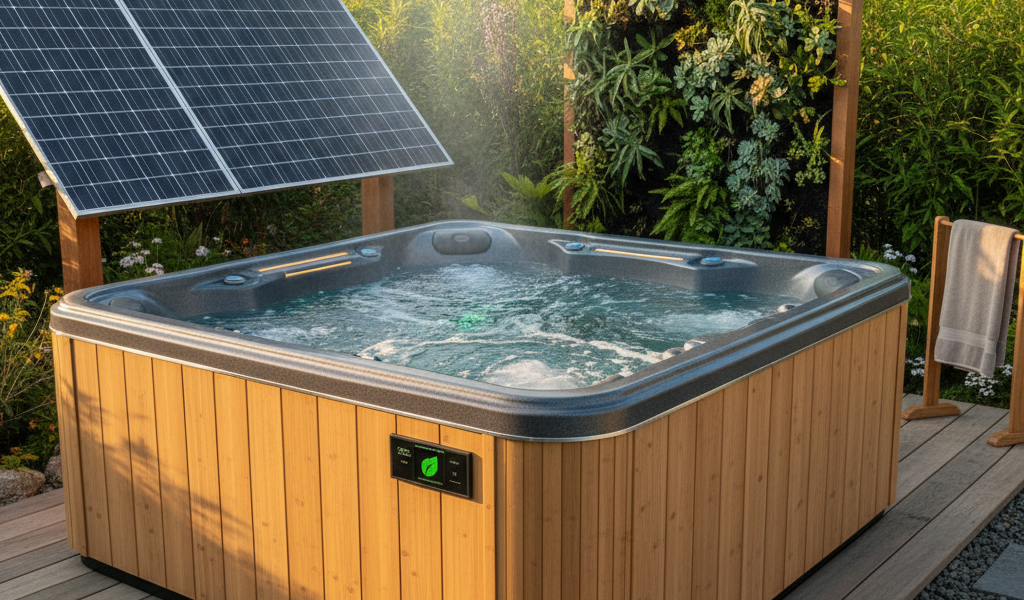
Energy‑efficient hot tubs deliver comfort with predictable monthly costs. Focus on full‑foam insulation, high‑R‑value covers, efficient circulation pumps, cabinet sealing, and smart controls. Below, we outline the features that matter, show cost estimates, and give setup tips to keep your energy footprint low year‑round.
What makes a hot tub energy‑efficient
- Full‑foam insulation: Dense, continuous foam around plumbing and shell reduces standby losses.
- High‑R‑value cover: Thick cores, tight hinge seals, and locking straps hold heat and block drafts.
- Efficient circulation: Dedicated low‑watt pumps maintain chemistry without high draw.
- Cabinet sealing: Minimize air infiltration with well‑sealed panels and gaskets.
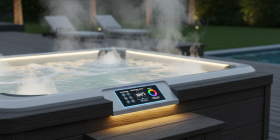
- Smart controls: Schedules, eco modes, and remote management enable off‑peak heating.
Feature comparison matrix
| Feature | Why it matters | What to look for |
|---|---|---|
| Insulation | Cuts heat loss and stabilizes temp | Full‑foam around shell and plumbing |
| Cover | Prevents convective and radiant loss | High‑R cores, tight hinge seals, straps |
| Circulation | Maintains water quality efficiently | Low‑watt dedicated pump system |
| Controls | Avoids 24/7 high setpoints | Eco modes, scheduling, remote control |
| Cabinet sealing | Limits air exchange in wind | Gaskets, sealed seams, service access |
Estimated monthly costs
| Climate | Efficient setup | Typical monthly | Notes |
|---|---|---|---|
| Cold | Full‑foam + high‑R cover + wind shielding | $30 – $60 | Schedule pre‑heat; avoid 24/7 high setpoints |
| Moderate | Full‑foam + tight cover + eco controls | $20 – $45 | Low‑watt circulation keeps chemistry stable |
| Warm | Panel insulation + sealed cabinet + good cover | $15 – $35 | Focus on water care and short pre‑heats |
Setup tips to reduce energy draw
Site & wind
Use screens or enclosures to reduce convective loss; avoid wind tunnels and drafts around the cabinet.
Cover discipline
Seat the cover fully after each session; check hinge seals and straps for tightness and wear.
Smart schedules
Pre‑heat before sessions; drop setpoints during off‑hours; avoid constant high temps.
Water care
Clean filters and balance chemistry to improve heat transfer and reduce pump workload.
Buying checklist for efficiency
- Insulation proof: Ask for full‑foam details and cabinet sealing specs.
- Cover quality: Verify hinge seals, core thickness, and strap hardware.
- Circulation system: Confirm dedicated low‑watt pump and schedule options.
- Controls & app: Ensure scheduling, eco modes, and remote adjustments.
- Service reality: Local dealer support to maintain seals and components long term.
CTA
Shortlist energy‑efficient models
Prioritize full‑foam insulation, high‑R covers, and low‑watt circulation. Add smart controls to keep monthly costs predictable.
Ad slot: mid-content
Maintenance for long‑term efficiency
- Weekly: Rinse filters, check cover seal, skim debris.
- Monthly: Deep‑clean filters, inspect cabinet gaskets, review schedules.
- Quarterly: Drain/refill, line flush, inspect pumps and heater, test GFCI.
- Annually: Professional tune‑up; replace worn cover seals and gaskets.
Conclusion
Energy‑efficient hot tubs combine insulation, a high‑R cover, low‑watt circulation, tight cabinet sealing, and smart controls. Choose models that prove these features, install with wind shielding, and keep a simple schedule and maintenance routine. You’ll enjoy year‑round comfort with stable, lower monthly costs.
Related posts (card grid)