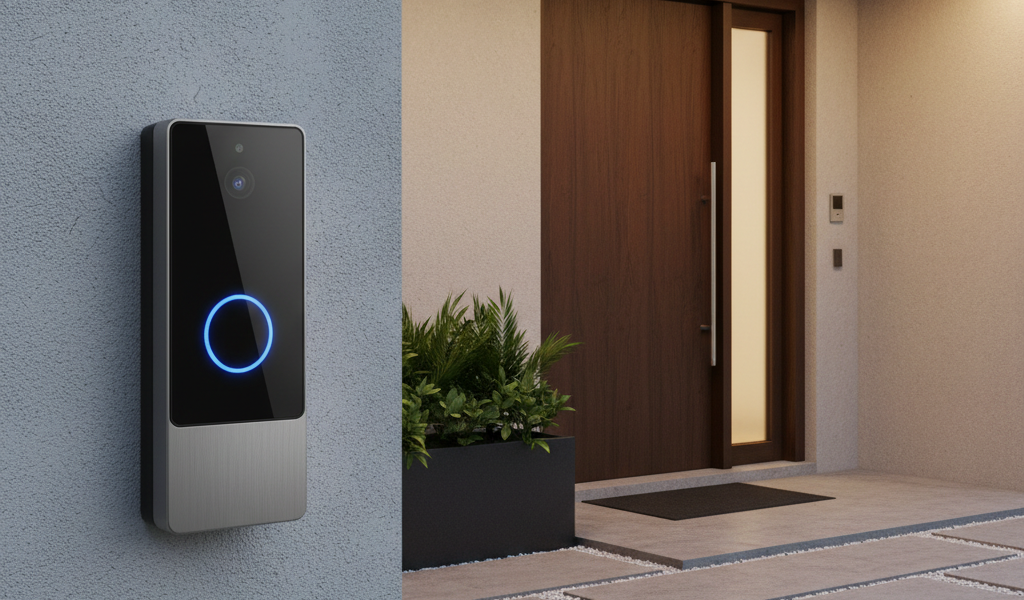
Smart doorbells add visibility and quick communication at your front entry. The best setups balance clear video, reliable motion detection, clean power, and privacy‑first settings. This guide walks you through the choices so you can install, configure, and maintain your doorbell with confidence.
Core specs to evaluate
| Spec | Why it matters | What to look for |
|---|---|---|
| Resolution & HDR | Clarity and dynamic range | 1080p–2K/4K with HDR to manage bright/low‑light scenes |
| Night performance | Visibility after dark | IR or color night options with low noise |
| Field of view | Coverage of approach and door | Balanced FOV; avoid fisheye extremes that distort detail |
| Motion detection | Reduce false alerts | Zones, sensitivity controls, person/parcel detection |
| Audio quality | Two‑way talk clarity | Noise suppression and echo control; reliable mic placement |
| Power | Uptime and reliability | Wired doorbell transformer or battery with solid runtime |
| Storage | Retention and access | Local (NVR/SD) or cloud with clear policies and encryption |
| Privacy | Control data and sharing | Granular roles, strong auth, privacy zones/masks |
Power options: wired vs. battery
Wired doorbells
Use existing transformer for constant power. Stable video and fewer charge cycles; verify voltage compatibility.
Battery doorbells
Flexible placement with quick installs. Plan seasonal charge cycles and avoid extreme temperatures.
Chime integration
Check support for mechanical/digital chimes; use adapters where required to protect the chime circuit.
UPS for network
Battery‑back your router for reliable alerts during brief outages.
Placement and mounting
- Height & angle: Mount near chest height; use wedge kits to frame the approach and door handle.
- Sun & glare: Avoid direct sun or glossy surfaces that blow highlights; adjust HDR and exposure.
- Weather protection: Ensure proper housing and seals; add a small hood if exposed.
- Cable management: Keep wiring tidy; use proper grommets and protect from moisture.
Detection tuning and alerts
Zones & masks
Exclude sidewalks/roads; focus on the approach and porch to reduce false alerts.
Sensitivity profiles
Use day/night profiles; start conservative to avoid alert fatigue.
Parcel detection
Enable parcel events and set reminders; pair with lock/lighting scenes for deliveries.
Notification hygiene
Enable alerts for meaningful events; avoid duplicative notifications across apps.
Storage and retention
- Local: NVR or SD card for privacy and control; manage drive/card health and backups.
- Cloud: Convenience and off‑site access; verify encryption, retention windows, and sharing defaults.
- Hybrid: Record locally for detail; use cloud snapshots or clips for quick remote review.
Smart home integration
- Scenes: Doorbell press triggers foyer lights and a short recording burst; adjust time windows.
- Locks: Pair with smart lock guest codes for deliveries; log events consistently.
- Cameras: Trigger nearby cameras to record when the doorbell detects motion or a button press.
- Announcements: Use speakers for doorbell chimes where mechanical chimes aren’t supported.
Privacy and security basics
- Roles & permissions: Limit admin accounts; enforce MFA; audit shared users quarterly.
- Privacy zones: Mask areas like public sidewalks or neighbors’ property.
- Network hygiene: Prefer Ethernet for bridges; secure Wi‑Fi; avoid open ports; use secure remote access.
- Firmware cadence: Update on stable releases; avoid beta firmware on entry devices.
Shortlist the right smart doorbell
Match power (wired vs. battery) to your entry, tune detection zones, and set privacy masks for confident everyday use.
Troubleshooting common issues
- False alerts: Refine zones/masks; lower sensitivity; adjust day/night profiles.
- Choppy video: Improve Wi‑Fi or use Ethernet for hubs; tune bitrate/frame rate.
- Audio echoes/noise: Re‑mount for better mic exposure; enable noise suppression.
- Power issues: Verify transformer voltage or battery health; check chime adapters.
Conclusion
A smart doorbell is most effective when video clarity, tuned detection, and clean power meet privacy‑first settings. Place it thoughtfully, set sensible alerts, and keep storage and firmware disciplined. You’ll get reliable visibility at your front entry without alert fatigue or data exposure.