Ad slot: top
Intro
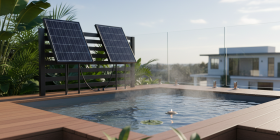
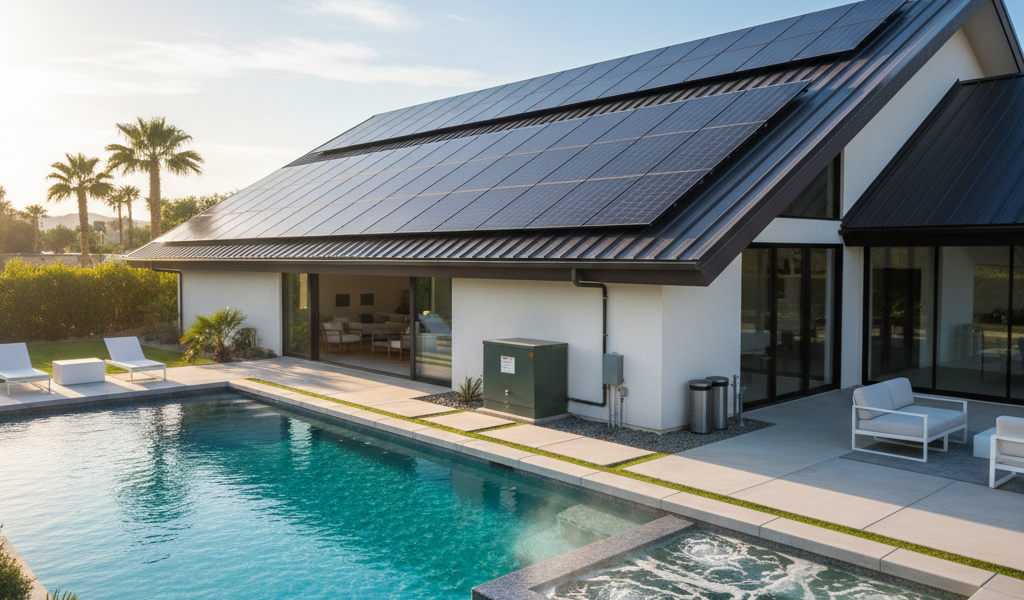
Solar roofs can supply electricity and heat for pools and spas. With the right system mix, you can run pumps, filtration, and smart controls on solar electricity while a dedicated solar thermal array handles water heating. Below we break down system types, sizing, controls, seasonal strategies, and upkeep so you can cut costs without sacrificing comfort.
Solar options for pools and spas
| System | Purpose | Pros | Considerations |
|---|---|---|---|
| Solar PV (photovoltaic) | Power pumps, controls, lighting | Flexible; grid tie or battery; year‑round use | Electric heating via PV can be energy‑intensive |
| Solar thermal (pool collectors) | Direct water heating | High efficiency for heat; cost‑effective | Needs roof area, plumbing runs, valves |
| Hybrid PV + thermal | Electric + heat coverage | Balanced loads; resilient setups | Higher planning complexity |
Heating vs. electricity: what to use where
Use PV for electrical loads
Run pumps, filtration, lights, and smart controls on solar electricity. Consider battery storage for off‑peak coverage.
Use thermal for water heating
Solar thermal collectors move heat directly into the pool/spa water with excellent efficiency and simple controls.
Blend for resiliency
Combine PV for devices and thermal for water to keep comfort stable while lowering monthly bills.
Smart valves & sensors
Automated diverter valves route water through collectors when conditions are favorable, optimizing gains.
Sizing fundamentals
- Collector area: Size thermal collectors to a fraction of pool surface; adjust for climate and desired season length.
- Roof orientation: Favor south‑facing exposures with minimal shading; confirm structural load allowances.
- Pump capacity: Ensure pumps can handle collector head/flow; use efficient variable‑speed models.
- PV capacity: Size for daily electrical loads and storage goals; integrate monitoring for optimization.
Controls and automation
- Diverter valves: Route water through collectors when the roof is hotter than the pool.
- Temperature sensors: Pool inlet/outlet and roof sensor data drive optimized heating decisions.
- Smart scheduling: Run filtration and circulation during solar production windows to reduce grid draw.
- App monitoring: Track temperature, pump status, and energy production to refine routines.
Seasonal strategies
Spring/Fall shoulder seasons
Maximize solar thermal; use covers to retain heat overnight; align pump schedules to sun hours.
Summer peak
Shift more loads to PV; maintain filtration and water quality with daytime runs; avoid overheating with cover management.
Winter considerations
Drain or protect thermal collectors where freezing is possible; lean on PV for device loads and monitoring.
Wind & evaporation
Use wind screens and quality covers to reduce evaporative loss and preserve accumulated heat.
Cost and ROI factors
| Component | Typical role | Notes |
|---|---|---|
| Solar PV | Electrical loads | Offset pump/lighting/control energy; potential net metering |
| Thermal collectors | Water heating | High heat efficiency; faster payback in longer seasons |
| Automation | Smart valves/sensors | Improves gains and lowers manual intervention |
| Covers & screens | Heat retention | Critical for overnight preservation and windy sites |
Maintenance made simple
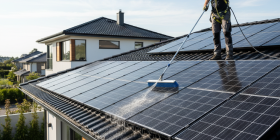
- Collectors: Inspect for leaks, debris, and mounting integrity; clean surfaces if soiling reduces gains.
- Pumps & valves: Check seals and flow; service variable‑speed pumps per schedule.
- Sensors & controls: Verify readings and automations; keep firmware and apps up to date.
- Covers: Repair tears, ensure tight fits, and store properly when not in use.
CTA
Plan your solar pool & spa system
Use thermal for water heat and PV for pumps and controls. Add smart valves, sensors, and high‑quality covers to lock in gains.
Ad slot: mid-content
Troubleshooting common issues
- Low heat gain: Check orientation/shading; verify valve logic and sensor placement; clean collectors.
- High energy use: Shift pump schedules to solar hours; use variable‑speed pumps; tighten cover routines.
- Inconsistent temperatures: Inspect diverter valves and flow balance; review wind shielding and cover quality.
- Automation gaps: Update firmware; recalibrate sensors; confirm app scheduling aligns with sun windows.
Conclusion
Solar roofs can power modern pools and spas efficiently by pairing PV for electrical loads with thermal collectors for water heating. With smart valves, sensors, quality covers, and seasonal scheduling, you’ll stabilize comfort and lower bills — all while keeping the system easy to run and maintain.
Related posts (card grid)