Smart locks let you control entry with phones, codes, fobs, and biometrics — all while keeping mechanical security intact. In 2025, look for strong encryption, reliable auto‑lock, offline access, robust battery life, and privacy‑respecting integrations. This guide maps the features that matter and helps you shortlist models that match your door, lifestyle, and ecosystem.
Core features to evaluate
| Feature | Why it matters | What to look for |
|---|---|---|
| Security standards | Protects credentials and commands | Strong encryption, secure key storage, tamper alarms |
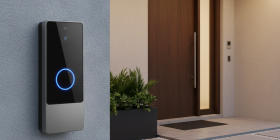
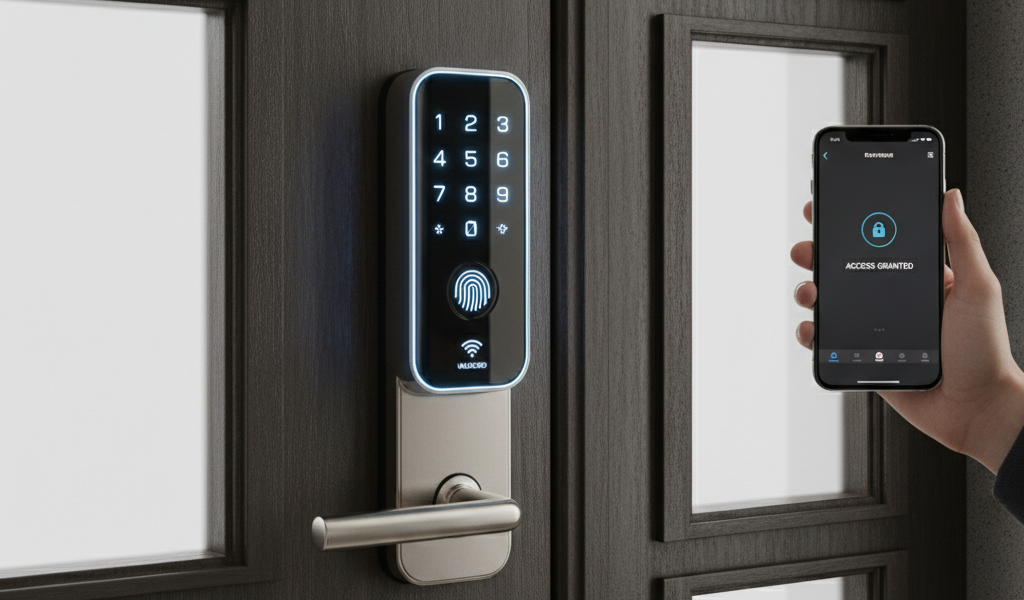
| Access methods | Flexible entry for households/guests | Mobile app, keypad codes, NFC/fobs, fingerprint (optional) |
| Auto‑lock & auto‑unlock | Prevents accidental left‑unlocked states | Reliable sensors/geofencing; adjustable timers |
| Offline modes | Works during internet outages | Local codes, Bluetooth/NFC, physical key backup |
| Battery & power | Ensures weeks/months of operation | Long battery life, low‑battery alerts, easy replacement |
| Door compatibility | Proper fit and safe installation | Deadbolt vs. lever, backset sizes, handedness, thickness |
| Privacy & data | Controls what’s shared | Local processing options, granular permissions, audit logs |
| Ecosystem integration | Smoother routines and alerts | Works with major platforms; routine triggers; secure APIs |
Access types and their trade‑offs
Keypad codes
Easy for guests and kids; rotate codes regularly and set time‑bound access for contractors and deliveries.
Phone/app
Great for owner control; ensure secure login, MFA, and clear audit trails for unlock events.
Fobs/NFC
Fast and convenient; useful for low‑phone workflows; manage lost fobs in the app immediately.
Biometrics
Fingerprint unlock speeds entry; always keep backup codes/keys for sensor or power issues.
Installation fit and safety
- Door measurements: Confirm backset, thickness, and handedness to avoid misfits.
- Strike alignment: Ensure smooth bolt travel; adjust strike plate for secure seating.
- Wiring & power: Most are battery‑powered; avoid pinch points and moisture ingress.
- Mechanical backup: Maintain physical key access and test it after installation.
Automation and routines
- Scenes: “Arrive” unlock + foyer lights; “Leave” lock + arm alarm; add time windows for reliability.
- Geofencing: Use conservative geofence radii and presence checks to limit false auto‑unlocks.
- Notifications: Enable unlock/lock alerts and failed code attempts with sensible thresholds.
- Guest access: Issue time‑bound codes with expiry; revoke on schedule.
Battery life and reliability
Low‑battery alerts
Keep alerts enabled and replace batteries proactively, especially before travel.
Cold weather
Battery performance drops in cold; consider lithium cells and check seals to reduce moisture.
Mechanical health
Lubricate the bolt and check alignment periodically to reduce motor strain and noise.
Offline behavior
Test local code unlock routinely; confirm the physical key works smoothly.
Privacy and data hygiene
- Permissions: Limit admin roles; use MFA; audit shared access regularly.
- Event logs: Review unlock attempts and schedules; detect anomalies early.
- Cloud vs. local: Prefer local processing where possible; secure any cloud integrations.
- Firmware cadence: Update on stable releases; avoid beta builds on core entry points.
Comparison quick matrix
| Area | Strong | Watch‑outs |
|---|---|---|
| Security | Encryption, tamper alerts, secure storage | Weak default codes, broad sharing |
| Access | Codes, app, fobs, biometrics | Over‑reliance on geofencing |
| Power | Long battery, proactive alerts | Cold weather drops, motor strain |
| Reliability | Good alignment, tested offline | Cloud dependence without fallback |
| Privacy | Granular roles, local options | Excessive logs sharing or open ports |
Shortlist the right smart lock
Match door fit and access needs, insist on strong privacy controls, and verify offline behavior before relying on automations.
Troubleshooting common issues
- Auto‑unlock misses: Tighten geofence and presence checks; add delay and redundancy.
- Motor strain or noise: Re‑align strike; lubricate; check door warp and weatherstripping.
- Code errors: Clear stale codes; reset schedules; review time zone and sync.
- Battery drain: Switch cell type; reduce excessive retries; update firmware for efficiency.
Conclusion
The best smart lock for 2025 combines strong security, predictable auto‑lock, flexible access, and privacy‑first controls. Fit the hardware to your door, test offline modes, and keep a simple routine of battery checks and firmware updates. You’ll get convenience without compromising protection at your primary entry points.